Organisations focus on values and behaviours, and ignore how people feel at work. Yet emotions drive connection, satisfaction, motivation, engagement, teamwork and creativity. They drive burnout and absenteeism too. So why do so many organisations overlook emotions at work?
Every company works on how people think. Almost nobody works on how people feel. We've been having half the conversation.
See what's inside → Enrol Now · US$249 → Enrol Now · US$299 → Enrol Now · US$398 → See the pricing →Enrolments open Wednesday 14 October, then a 48-hour window at US$249 USD. The cohort itself begins Sunday 1 November, two and a half weeks later. Bring a friend, free.
The lowest price the year will see. Now open until Monday 19 October, 11:59pm NZT.
Subscriber Special rate US$299 USD with code NOVCOHORTECC. Normally US$398 for the public. Open until the course starts Sunday 1 November.
US$398 USD. Last chance to enrol before the cohort begins Sunday 1 November.
This cohort has begun. Doors are closed. We open the next intake in 2027.
"When I downloaded the free version I thought I'd got it figured out. I realised after the Masterclass how wrong I was."
Masterclass graduate
Whether you're shaping the emotional culture of your own team, or you take this work into the organisations you work with, there's a door in for you. One door, two welcomes.
You want to shape how your team feels, not just what it values.
You take this work to the rooms you consult in.
And it doesn't matter whether you've never opened the deck, or you've run this workshop a hundred times. This is the foundation course, and it meets you exactly where you are.
Every organisation, every team, every leader is navigating emotions at work, whether they name them or not. They show up in four places. This Masterclass goes all in on the first one.
The emotional experience of being part of this team. The feelings that shape how people show up, connect, and do their work together.
The emotional impact a leader has on the people around them. The feelings they create, amplify, or fail to notice.
The feelings that surface when things shift. The emotions that either help people move through change or keep them stuck.
The feelings designed into the experiences you create for the people you serve. The emotions that shape loyalty and trust.
This Masterclass goes deep on the first one. How your team feels, and how to shape it on purpose, together.
That doesn't mean the other three stay locked away. You'll see how what you're building here shows up in leadership, change and stakeholder relationships too. Then across the 90 days of Live sessions built into your cohort, you're introduced to real applications in each of those areas, so you can take the practice further. Into other parts of the workplace, and out to your clients, driving impact and performance well beyond team culture alone.
You've sat through it. The offsite about values. The sticky notes, the debate, the vote on the final five words. A poster gets ordered for reception. Everyone agrees it looks good. Then, quietly, the meetings carry on exactly as before. Nobody says what they're really thinking any more than they did last month. The value everyone nodded at never made it into how the place actually feels to work in.
Culture is usually done to people. A leadership team decides the words, then hands them down. People are told what the culture is, rather than asked what it feels like to be part of it. So it never really becomes theirs. It stays a poster, not a practice.
Most companies live on the left without ever trying the right. This Masterclass moves you across.
The shared values on a wall, and a survey once a year.
The unspoken rules for what people are allowed to feel, and what they learn to hide.
Written down. Conveyed in words.
Felt in the silences, and in what gets praised or quietly side-eyed.
The blueprint for how people should think and behave.
The energy that brings the blueprint to life. Or quietly kills it.
Keep your values. This is the other half. Values say how you want people to think and behave. Emotional culture is how it feels to actually live them. When the two are out of sync, things break. A company says it values innovation, then punishes mistakes, so nobody takes a risk. When the two line up, values stick. A value of collaboration is more likely to hold up when the culture encourages people to feel curious, not afraid. Excellence works when it's built on people feeling pride, not alone. The underlying emotions, whether they're present or suppressed, decide whether your values become real or stay something beyond posters on the wall.
Adapted from our white paper on managing your emotional culture, below.
For years I ran values workshops. Ask the room what they think our values are, disappear into a meeting room, come back with five words for a poster. It worked on paper. It rarely changed anything real.
I feel that's because it was only ever half the conversation. Vision, values, behaviour, that's cognitive culture, the part everyone already works on. Emotional culture is the other half, how people feel, or should feel, doing the work. Twenty years of research says it's the part that actually shapes how people think and behave day to day, and it's the part almost nobody touches.
That's the gap I found on a plane home in 2016, and it's the whole reason this course exists.
Some people will look at a deck of cards with the word 'emotions' on it and dismiss it outright. Prove the ROI. We don't talk about feelings here. I feel that reaction more often than you'd think.
There's a reason arguing back doesn't work. It's called the backfire effect. Show someone evidence against a belief they hold and it doesn't change their mind, it entrenches it further. No amount of data moves a person who has already decided this doesn't matter.
What moves people is the experience itself. We change beliefs through what we do, not what we're told. That's exactly what this exercise is built to do, quietly overcome the cynicism before anyone's had to argue their way past it.
A real clip from inside the course
Most culture work is done to people. This is built with them. People support what they create. The Masterclass teaches you to run the workshop that does the building, self first, then the whole team.
The concept of an emotional culture, distinct from the values statement, comes from Sigal Barsade and Olivia (Mandy) O'Neill's Harvard Business Review article, "Manage Your Emotional Culture" (sits behind the HBR paywall). We built our own free 34-page guide on top of it.
The free 34-page R&E white paper, built on the Harvard Business Review research above. Download it before you enrol, or after. Either way, it's yours.
Download the free guide →The deck opens the door. The course teaches you to build the house.
Made to stick. What's the point in learning all this if you can't make it stick, for yourself or the team you lead?
What you getSelf-paced lessons across 90 days. Eight live mentor-led calls, five weekly to start and three bonus calls later on. The full Emotional Culture Crafting workshop and canvas system.
Why that mattersYou walk away with a repeatable workshop you can run with your own team, or take to a client, starting the week you finish.
What you getAn extra 90 days inside our wider community once the course ends.
Why that mattersSo it actually sticks, alongside a community of people doing this work every day, around the world.
One Emotional Culture Deck plus the full Culture Toolkit shipped to your door. Included with every cohort enrolment.
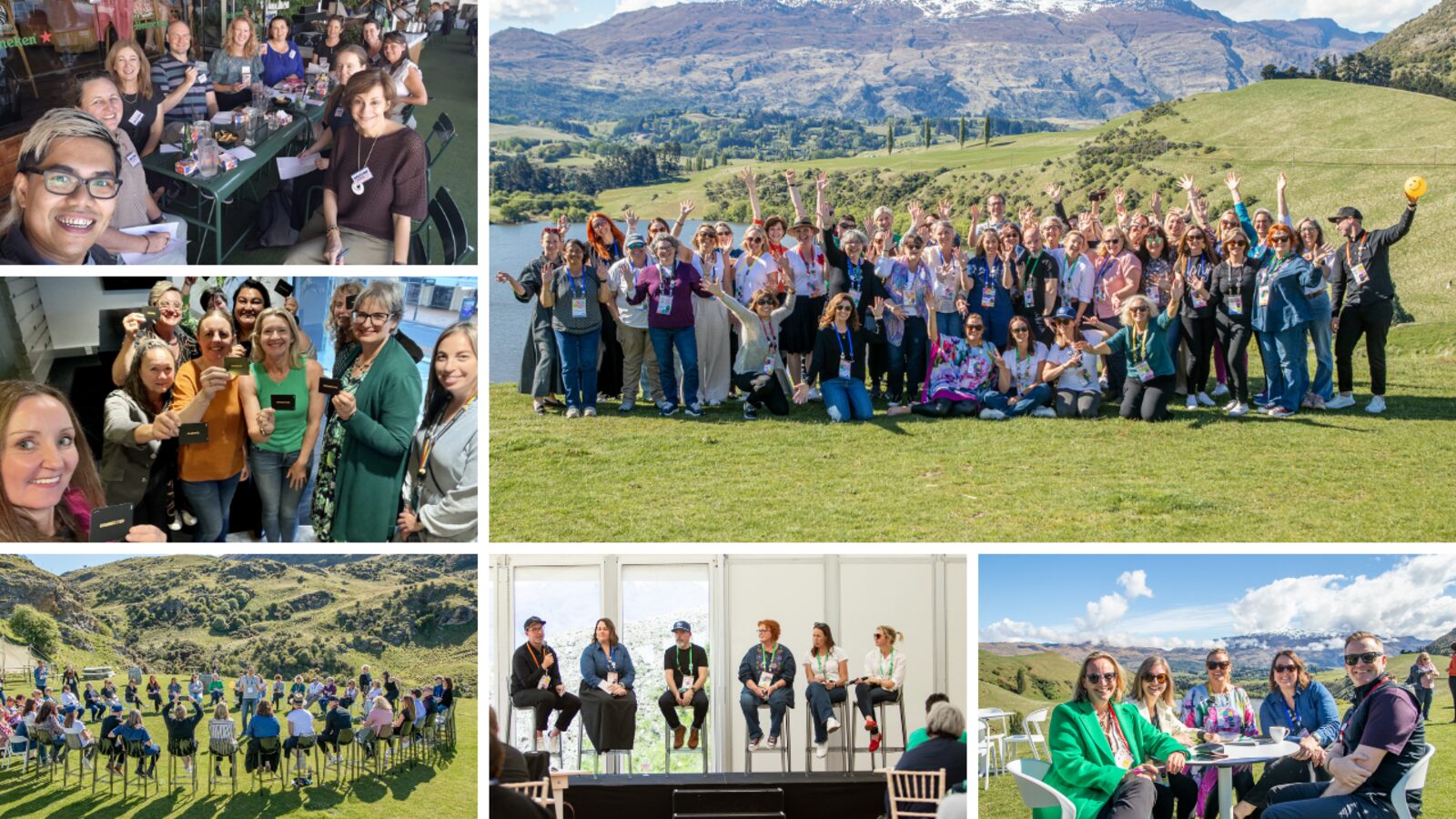
Some of the people you'll be doing this work alongside.
"The course gives you 90 days to learn the foundations. But learning isn't the hard part. Making it stick is."
That's why every cohort enrolment includes a further 90 days inside the community. To ask questions when you get stuck, share what's working, and keep going when it feels hard.
Three tiers across the run-up to the cohort. Early access is the lowest price the year will see, and the only time you can bring a friend through completely free. The Subscriber Special is open right up to course start. The Public price is what the course costs outside our cohort windows. All prices in USD.
The Subscriber Special is open right up to course start on Sunday 1 November. The Public price is what the course costs outside our cohort windows. All prices in USD.
All of this for US$249 instead of US$398.
All of this for US$299 instead of US$398.
Same course. Same community. Same toolkit. The earlier you join, the less you pay.
Prices shown in USD. Choose your own currency at checkout.
Bring a friend or colleague through with you for free. Learning is better together. Not a shared login, not a plus-one: your friend gets the entire cohort, the community and the bonus sessions, at no cost to them, plus their own Emotional Culture Deck and Course Toolkit, worth $99, on top of their free course access. We ship the kit to you as one parcel, and you pass their deck and toolkit on to them yourself. There's no friend field at checkout. Straight after you enrol, your welcome email has a button that says “Tell us who you're bringing”. Add their name and email, and we send them their own invitation, with you copied in. There's nothing for them to pay. Not the course, not the kit, nothing.
One small thing at checkout: enrol as one, don't change the quantity. You won't see a field for your friend at checkout. That comes straight after, in your welcome email.
One small thing at checkout: enrol as one, don't change the quantity.
Beautifully simple and yet complex and deep.
— Masterclass graduate
Most culture courses leave you on your own once the modules end. We don't. Every person who joins the cohort gets eight live calls: five Course Conversation Calls built into the course itself, plus three bonus sessions on top.
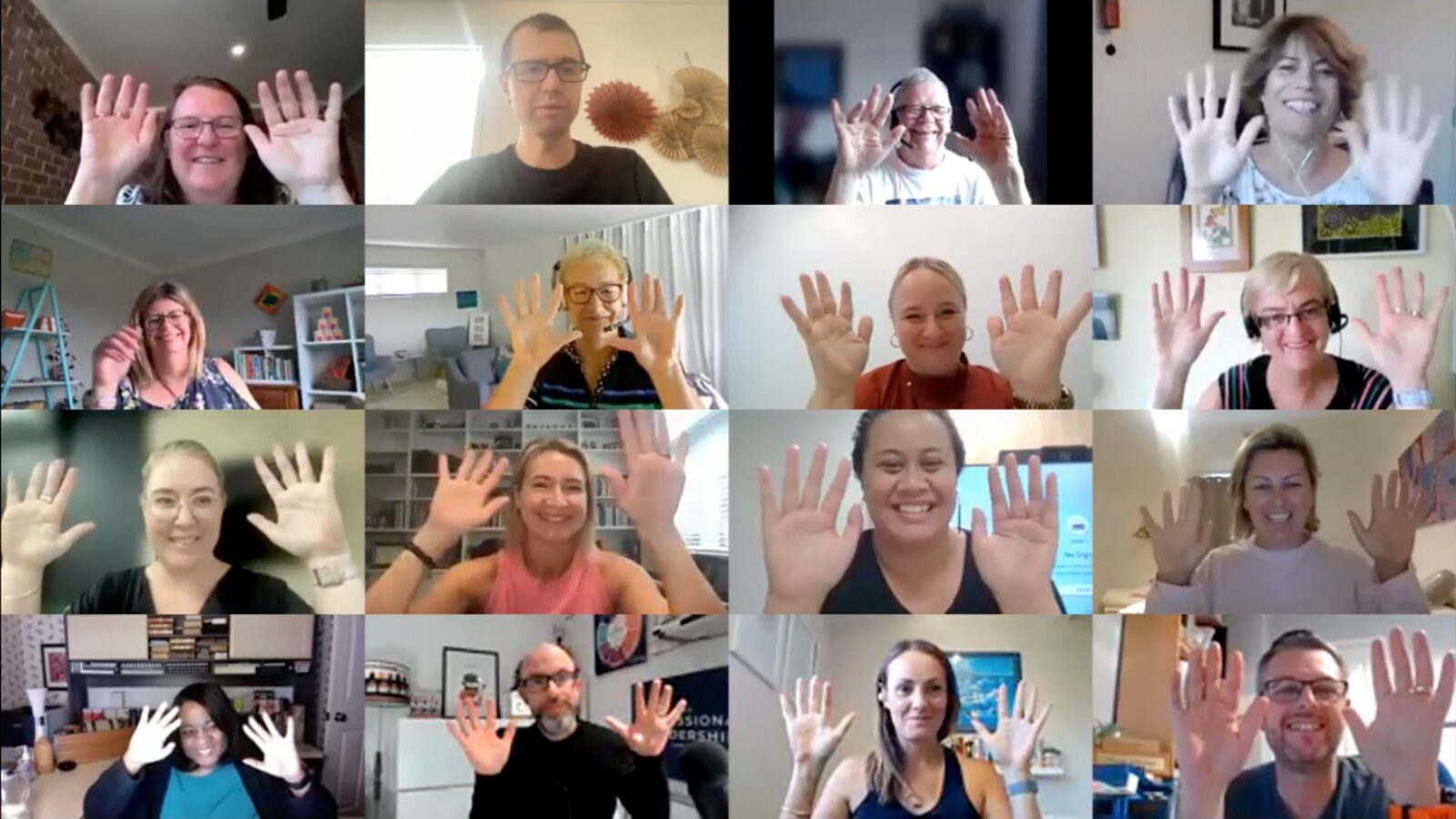
Real faces from a real Course Conversation Call.
These calls support you through your first five weeks, because how you start anything matters. We recap that week's lessons, go deeper on a specific activity through play, and open the floor for you to ask our global Elephant Rider mentors anything.
Hosted by Katherine Riddoch and Denise Hartley-Wilkins.
These three extra sessions land further into your journey, roughly six weeks apart, to keep the conversation going long after the course itself ends. Each one is a chance to meet people from our wider community who are a little further down the path, using the deck in their own teams and organisations. You get to ask them anything, learn from what’s worked and what hasn’t, and hear the challenges they’ve worked through since finishing the course.
For 48 hours only, Learn & Live opens at US$249 (use code EARLY249ECC at checkout). Same course. Same community. Same physical Emotional Culture Deck and Culture Toolkit shipped to your door. The only things that change are the price, and the fact that you can bring a friend or colleague through the cohort with you, completely free. No shipping for them to pay either.
After Monday 19 October 11:59pm the offer reverts to US$299 for subscribers and US$398 for the public. The US$249 window does not come back.
Course begins Sunday 1 November. 30-day money-back guarantee.
Same course. Same community. Same toolkit. This is the lowest price the year will see.
Course begins Sunday 1 November. 30-day money-back guarantee.
180 days of cohort and community access. The physical Emotional Culture Deck and Culture Toolkit shipped to your door. Eight live mentor-led calls, five weekly to start and three bonus calls later on. Subscriber Special rate US$299 with code NOVCOHORTECC until the course starts Sunday 1 November.
Course begins Sunday 1 November. 30-day money-back guarantee.
180 days of cohort and community access. The physical Emotional Culture Deck and Culture Toolkit shipped to your door. Eight live mentor-led calls, five weekly to start and three bonus calls later on. Final window before enrolment closes.
Course begins Sunday 1 November. 30-day money-back guarantee.
Your first 90 days are the online course itself, self-paced, with five weekly live mentor-led calls if you want the structure. Then a further 90 days living it in the community, with three bonus calls along the way, embedding the work in your real-world practice. 180 days in total, and the full Culture toolkit shipped to your door.
The full Emotional Culture Crafting Masterclass, watch at your own pace.
Five across the opening weeks of the cohort, then three bonus calls between weeks 12 and 24. Optional, highly recommended. Hosted by ECD Certified Consultant mentors.
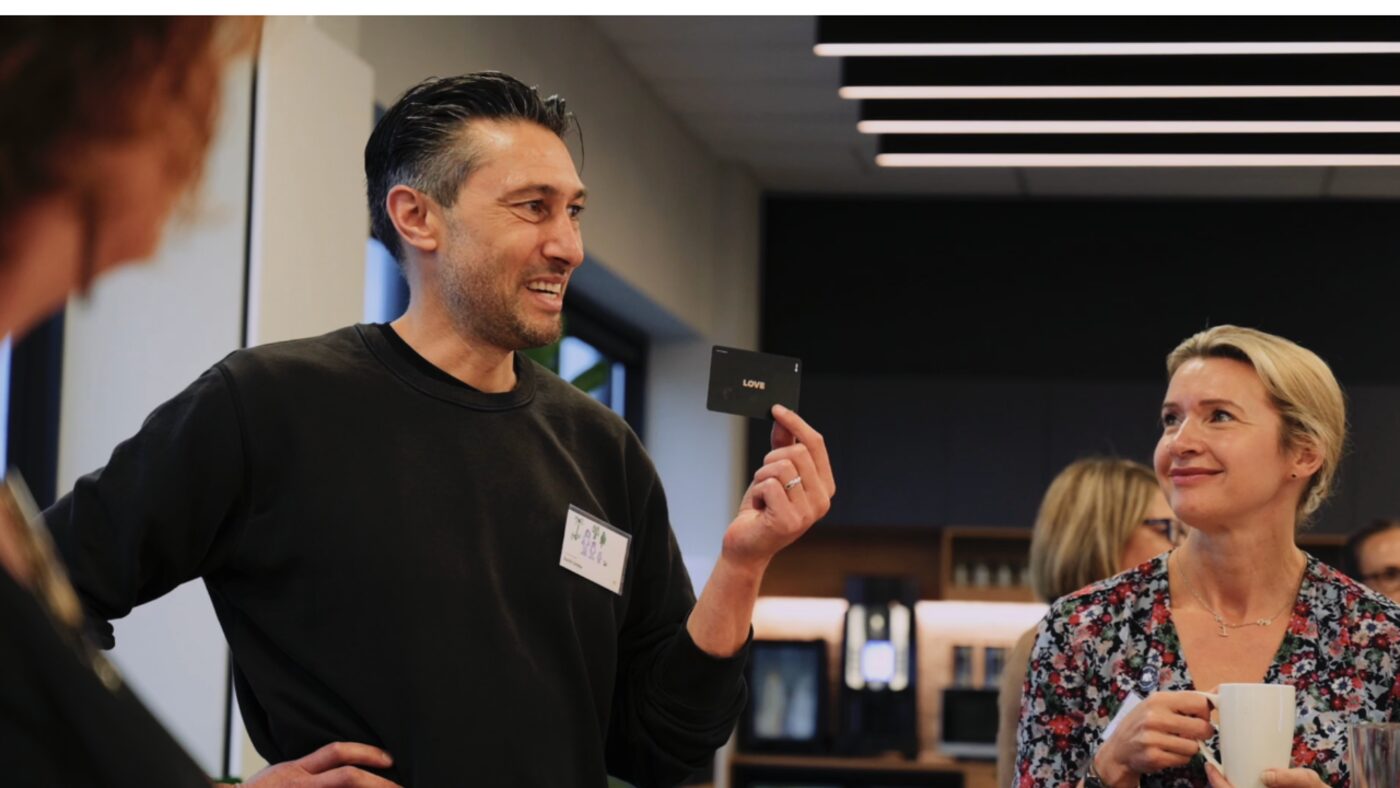
The simple check-in that opens every workshop we run. One black card, one white card, four minutes.
The workshop canvas that turns your team's emotions into behaviours and rituals.
Keep the culture work alive after the workshop ends, tracked rather than left to fade.
How to notice and spread the moments your culture is already working.
Start with your own relationship to the culture, before you take it to a team.
Everything you need to run the Map Your Emotional Culture workshop yourself, start to finish.
Culture Practitioner Badge & Pathway. Complete the course and earn your ECD Culture Practitioner badge, plus entry to the wider Certified Pathway: Practitioner to Consultant to Master.
People ask for these, so here they are in their own section. From inside the course, and from the wider R&E community.
A culture built and rebuilt over four years, one Emotional Culture Deck workshop at a time.
Teams across Australia and New Zealand each mapping their own emotional culture, in their own words.
The same shared language for emotional culture, spreading store by store.
Broken, eventually, by the white cards. What a team can say once someone finally asks.
"You can have the mechanisms, the processes, the plan for how it's going to work. But the people underneath won't be happy if you don't address the feelings."
Susannah King · Amazon, a global team across eleven countries · measured with Wharton's Professor Michael Parke"The weekly retro is such a powerful tool for quickly and deeply establishing connection, support and appreciation. My workshop participant felt encouraged, and so do I."
Doctor & Leadership Facilitator
real case studies inside the community right now, growing every month
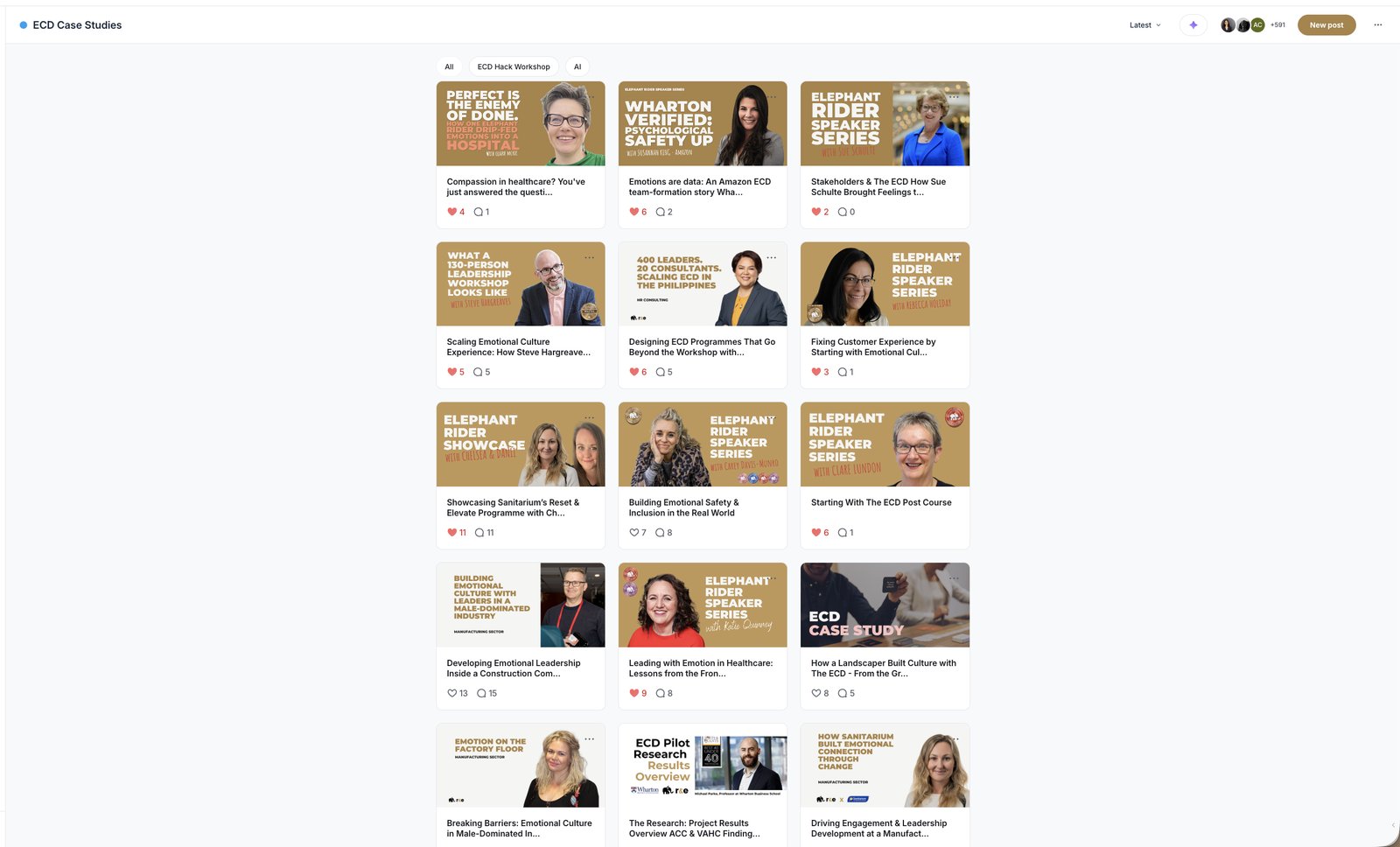
A peek inside the community's case study library
See all our success stories, including Sanitarium, the Amazon pilot, Goodstart Early Learning across 690+ centres, BurgerFuel, Cricket Wellington, IBM Romania, KPMG and more → The ECD Success Stories
Real graduates, real badges. Click to take a closer look.
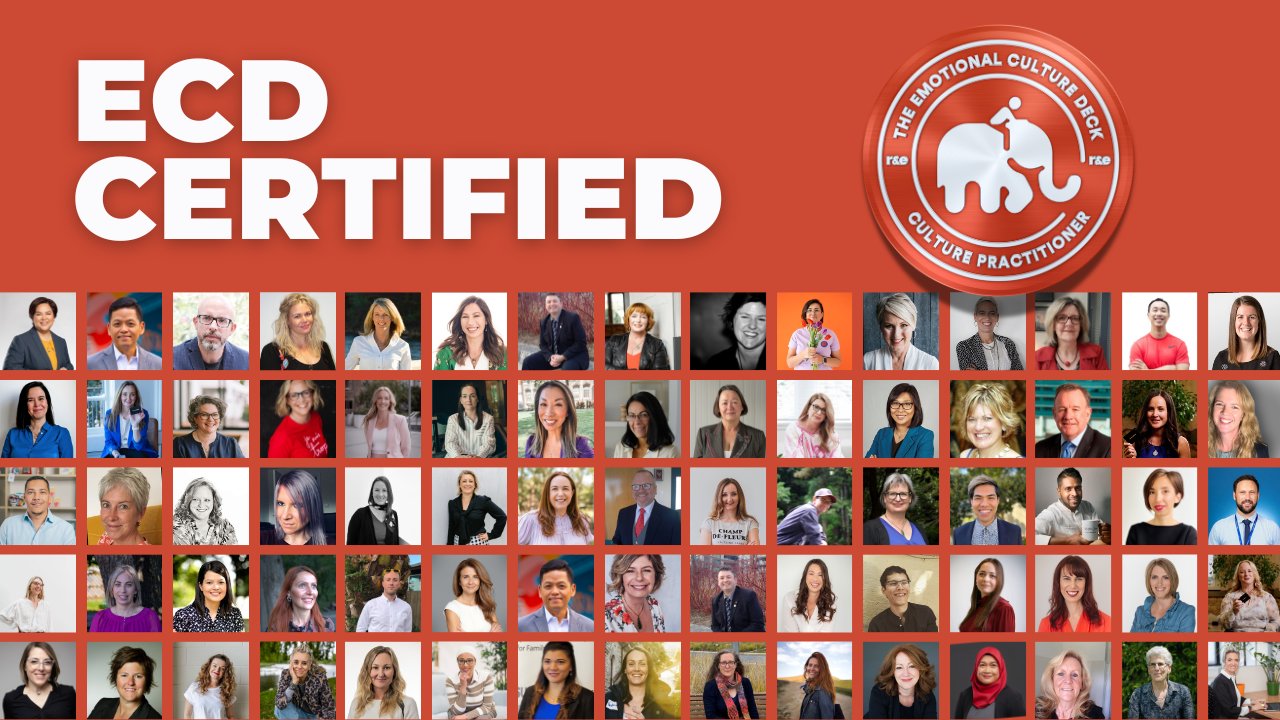
Watch the video →
We don't only measure how teams feel. We measure what moves because of it.
Tracked across real ECD workshops and engagements, run by R&E's ECD Partners.
These are not soft measures. They change how teams work and perform.
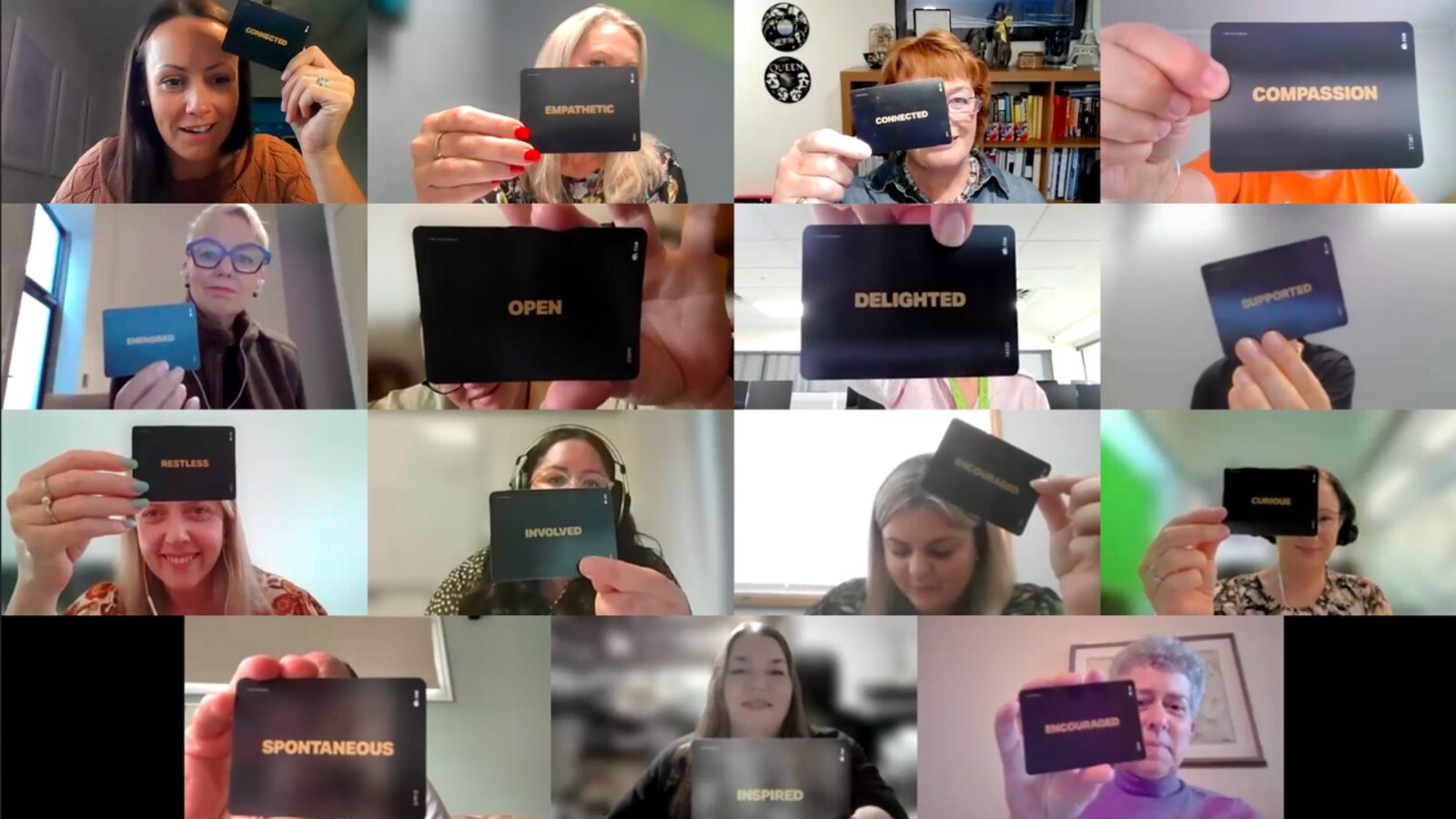
The actual deck, in actual use. Real words, real people, real calls.
Real people, real course reviews. Swipe or use the arrows to see more.
"I felt immersed in the whole process to the point I was losing track of time. I would recommend this course to anyone who has even the slightest interest in learning more about emotional culture."

"The structure of this course is excellent, as is the learning platform. The process and tools bring forth what workplaces and relationships are crying out for right now."

"This course is a real game-changer for me. Now, with these beautifully designed cards, I have a practical tool to guide these conversations, making it easier to explore challenging topics."

"The ECD Masterclass Course is a framework that can best be described in two words: simple, powerful. It's inclusive, engaging, and unlocks the conversations so many don't know how to have."

"I have thoroughly enjoyed this course. Seeing someone who is like me, who doesn't like public speaking and feels anxious most of the time, deliver such a powerful tool used world-wide."
Over 2,000 people have done this course, online and in person with our Certified Partners. A curated set sits at the decision points across this page. The full, live feed is below, updated automatically.

A small slice of the Elephant Riders community. Over 2,000 people, and counting.
A graduate, in their own words.
Every verified review since the course launched. Updated automatically.
The Certified Pathway begins the moment you finish your first course and become a Practitioner. Mary Chieu-Kwuan Loh started in this Masterclass in 2021. Today she's a Certified Consultant, delivering this work to organisations of her own.
A first course. A badge. Then, if you want it, a whole pathway from here.
"This is a platform that empowers you... I wish I had found it sooner."
— Masterclass graduate
Enrolments open Wednesday 14 October, then a 48-hour window at US$249. Bring a friend, completely free. Same course, same community, for everyone in the cohort. The earlier you join, the less you pay.
Early bird is open until Monday 19 October, 11:59pm NZT. Bring a friend, free. After that the price moves to US$299 for subscribers, then US$398 for the public.
Subscriber Special US$299 with code NOVCOHORTECC. Same course, same community, same toolkit. The price moves to US$398 as the cohort nears.
US$398. Last chance to enrol before the cohort begins Sunday 1 November. Same course, same community, same toolkit.
See the full offer → Enrol Now · US$249 → Enrol Now · US$299 → Enrol Now · US$398 →Emotions show up in four places at work. This course is the one for culture, and it stands complete on its own. It's also one of four frameworks within a single system, each running on the same deck, held together by one emotion strategy. Once you're inside, you'll discover the others, and a community that runs across all of them.
the team's emotional culture
the emotions people and teams need to thrive
the emotions needed to navigate change
the emotions in the experience you create for the people you serve
Every one of them teaches you to use the Emotional Culture Deck. Every one earns you a Practitioner badge and a place on the same certification pathway. You don't need the whole system today. You just need the one in front of you, and this is the one most people start with.
Emotions aren't the soft part of work anymore. They're data, and the foundation of everything. At R&E we move & measure the emotions that drive performance, because the most human part of work has always been the most avoided & unmeasured.